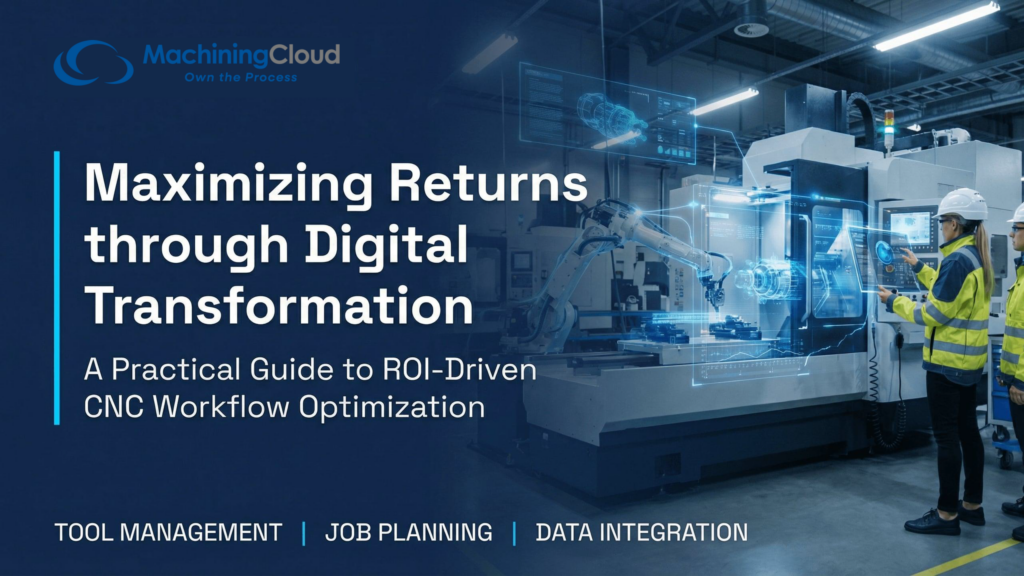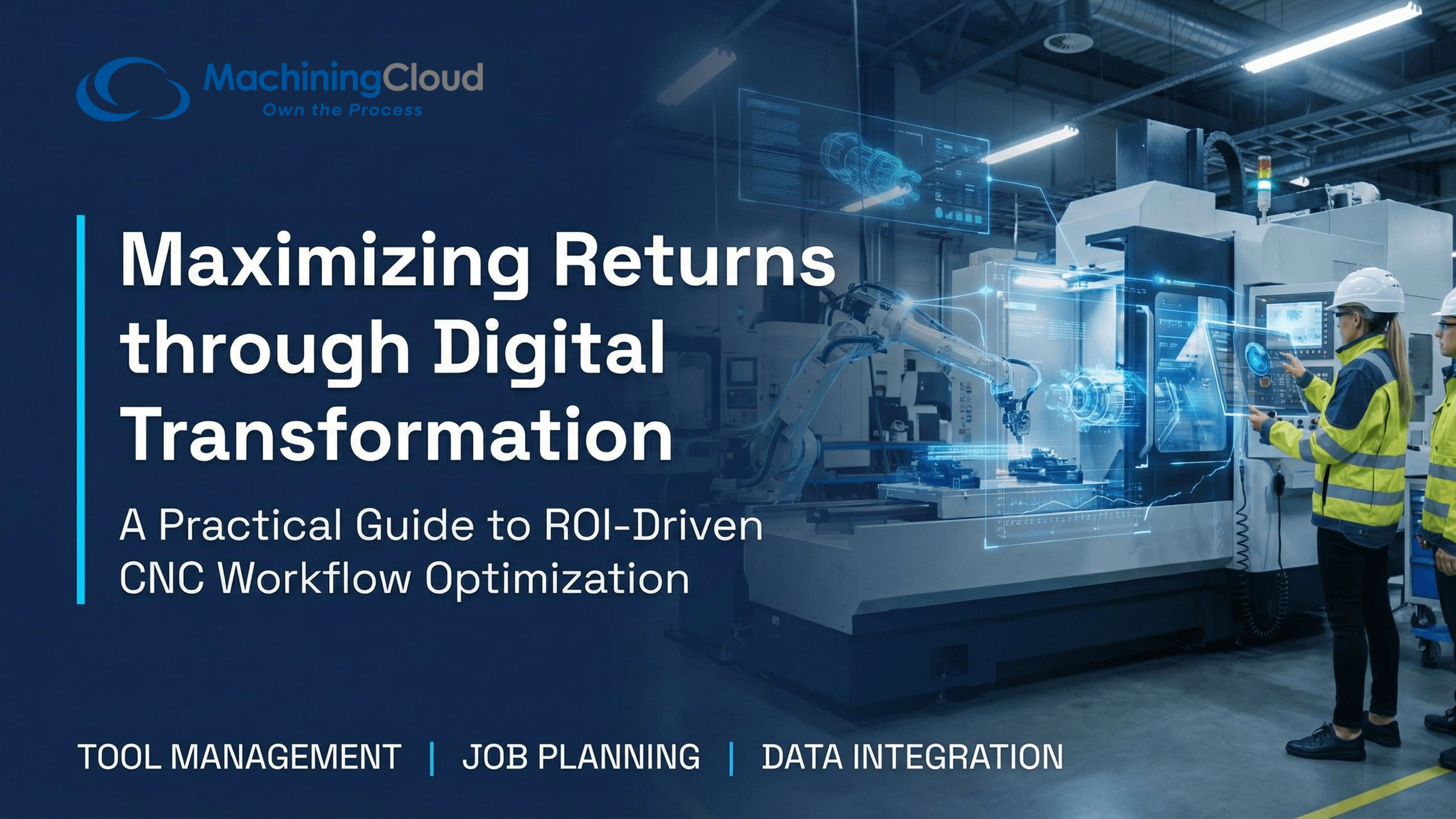
Digital transformation is no longer optional for shops facing rising labor costs, increased part complexity, and the looming risk of “Knowledge Loss” as senior machinists retire. This guide outlines a strategic shift from relying on tribal knowledge to establishing a documented, data-driven process that lives within a Single Source of Truth. It breaks down the transition into three essential pillars: Tool Management (unified catalogs and standardized data), Job Planning (expert recommendations via Tool Advisor), and Data Integration (seamless flow into CAM, TMS, and ERP systems).
The platform enables shops to build a digital tool library featuring over 65 manufacturers, ensuring that every programmer uses manufacturer-validated feeds, speeds, and 3D models. Beyond the immediate financial gains of $79,600 per year, this transformation offers massive “unquantified upside,” such as virtually eliminating machine crashes through accurate simulation and reducing “time-to-productivity” for new hires from months to weeks. By owning the digital process, shops can quote faster and win more high-margin work in an increasingly competitive market.