Let’s cut through the noise.
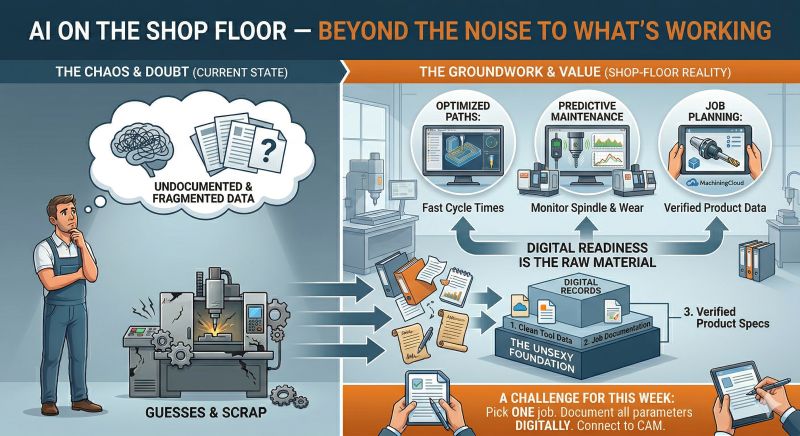
AI is only as good as the data underneath it. And in most shops, that data is a mess. Tool specs in a binder. Feeds and speeds in someone’s head. Job setups passed down like folk recipes. You can’t layer intelligence on top of chaos.
The shops making real progress aren’t buying the flashiest software — they got serious about structuring their data first. Clean tool data. Consistent job documentation. Digital records of what worked and what didn’t. That’s the unsexy foundation. But it’s where the leverage is.
Three areas where AI is creating real value in CNC right now:
Tool path optimization: CAM systems are getting smarter about adaptive clearing, chip thinning, and tool engagement, and cycle times are dropping for shops paying attention.
Predictive maintenance: monitoring spindle loads, vibration, and tool wear in real time, flagging problems before they become scrap. Shops running newer Mazak, DMG, and Haas machines are doing this now.
Tool selection and job planning: MachiningCloud built a platform giving programmers instant access to verified tool specs, 3D models, and cutting parameters from 65+ manufacturers. That structured data is what AI needs to make real recommendations, not guesses.
The honest advice: don’t start with AI. Start with your data. Get tooling information out of binders. Digitize job planning. Build a single source of truth for tools, assemblies, and parameters. Once that foundation is in place, AI becomes a natural next step, not a leap of faith.
A challenge worth trying: pick one job in your shop and document every tool, every assembly, every parameter digitally, in a system that talks to your CAM software. That single exercise will reveal more about your AI readiness than any conference session.
Source: https://www.linkedin.com/feed/update/urn:li:activity:7444891246797565952/