For decades, aerospace and defense work was something you found inside a machine tool show: a titanium demo part here, a five-axis impeller there. In 2026 it got its own aisle.
At AMB in Stuttgart, organizers ran a “Defense & Security Opportunities” program for the first time. At IMTS in Chicago, EOS presented its new M4 Onyx laser powder bed fusion system, aimed squarely at defense and aerospace buyers looking for localized, faster production. That is an alternative to long, fragile supply chains.
The message from both sides of the Atlantic is the same: defense production is growing, it wants to stay close to home, and it is looking for capable suppliers.
Why this matters even if you don’t make missiles
Most machine shops in the A&D supply chain aren’t prime contractors. They are tier-two and tier-three suppliers making brackets, housings, fittings, landing gear components and engine hardware. When primes and governments push to bring production home, the pressure flows down to those shops in three ways:
- More RFQs, tighter lead times. Bringing work back from overseas suppliers means domestic shops are asked to quote and ramp faster.
- Stricter documentation. Traceability requirements don’t relax when volume rises. If anything, they get tighter.
- Tougher materials, less margin for error. Titanium, Inconel and other heat-resistant superalloys punish poor tool choices with scrap, rework and missed deliveries.
The tooling side of traceability
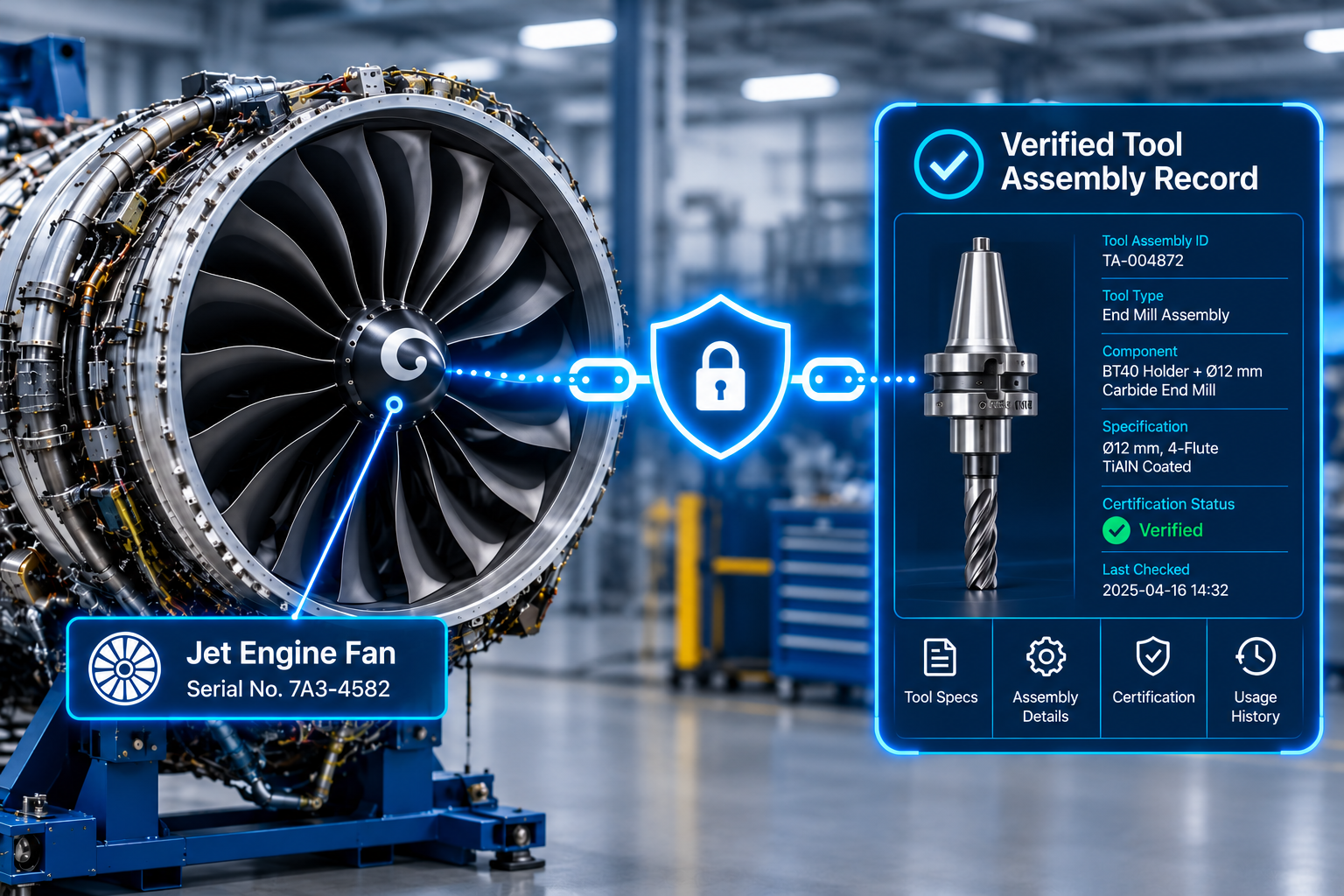
When auditors talk about traceability, they usually mean material certificates and inspection reports. But a growing share of A&D customers want to know how a feature was produced: which tool, which holder, which cutting parameters, and whether the process can be repeated exactly at the next lot.
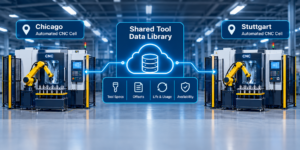
That is hard to prove when tool data lives in different places. One version sits in the CAM system, another in a presetter, and a third on a setup sheet. Each copy is a chance for a mismatch, and every mismatch in A&D work can mean a nonconformance report.
Shops that are winning more defense work tend to share three habits:
- One source of truth for tool assemblies. The same digital assembly, built from manufacturer data, is used in CAM, simulation, presetting and on the setup sheet.
- Qualified tooling, locked in. Once a tool and its parameters are proven on a part, they are saved and reused, not rebuilt from memory on the next order.
- Simulation before the spindle. Accurate 3D tool and holder models let programmers check reach, clearance and collisions before an expensive blank ever touches the machine. That digital twin approach started in aerospace and is now spreading across the supply chain.
Getting ready for the defense ramp-up
If you are bidding on more A&D work in 2027, look at how your tool data flows today. Can you rebuild the exact assembly used on a part from two years ago? Can you send a programmer, a setup operator and a quality engineer the same tool definition in minutes?
MachiningCloud gives A&D shops verified product data from leading cutting tool and workholding manufacturers. With it, you can build complete assemblies, export them to CAM and tool management systems, and keep one consistent record of how every part was made.
Defense has its own aisle now. Make sure your shop is ready to be in it.