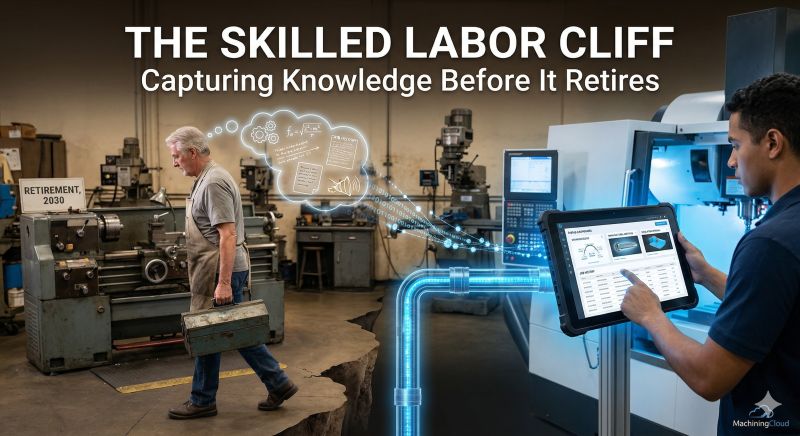
A machinist with 30 years on the floor doesn’t just know how to run a lathe. They know which insert geometry actually works on that tricky titanium alloy. They know the sound a spindle makes two weeks before the bearing goes. They know what happened the last time a particular job ran — what worked, what didn’t, and why.
That knowledge lives in their heads. And when they retire, it walks out the door with them.
We talk a lot about training pipelines — and yes, we need more apprenticeships, more community college CNC programs, more partnerships with trade schools. But training takes years, and shops are losing experienced people faster than they can replace them. Even doubling enrollment tomorrow, the math doesn’t work for the next decade.
So what’s the parallel strategy?
The shops navigating this best aren’t just hiring harder. They’re capturing institutional knowledge in systems instead of relying on it living in someone’s head. That means standardizing setup procedures. It means using simulation to prove out programs before they touch metal. And it means having real data infrastructure behind operations.
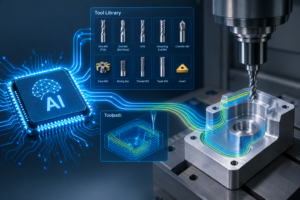
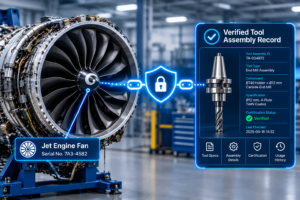
This is something MachiningCloud thinks about constantly. The platform gives shops access to manufacturer-certified cutting tool data and recommendations — so a second-year machinist isn’t guessing at feeds and speeds for an unfamiliar material. But beyond tooling data, job management capabilities let shops build a digital record of every job ever run: the exact tools used for each operation, the parameters, the setup. When the most experienced programmer retires, that history doesn’t disappear. And when a job comes back six months later, teams aren’t starting from scratch — they’re pulling up exactly what worked last time.
The skilled labor cliff isn’t a temporary disruption. It’s a structural shift. And the shops that come out ahead will be the ones that started turning tribal knowledge into searchable, repeatable data — before the last person who remembered walked out the door.
Source: https://www.linkedin.com/feed/update/urn:li:activity:7446993384415576064/